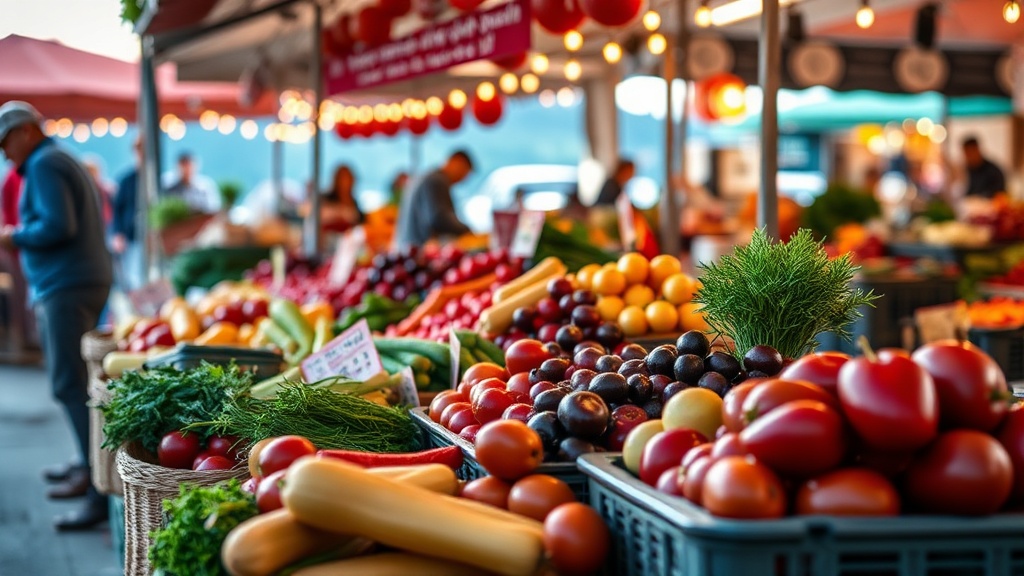
Finding the Best Seasonal Produce at Local Williams Lake Markets

Are you tired of buying grocery store tomatoes that taste like cardboard and have the texture of wet paper? This guide shows you exactly how to track down the freshest seasonal produce at local markets right here in the Cariboo region. We'll look at when to shop, what to look for, and how to make the most of our short, intense growing seasons in the Williams Lake area.
What is the best time to shop for seasonal produce in Williams Lake?
The best time to shop for fresh produce is during the peak summer months, specifically from late June through September, when local crops are actually ready for harvest. In the Cariboo, our growing season is shorter than the coast, so you have to be strategic.
If you wait until August to look for berries, you might find the best varieties are already gone. Most local growers here focus on hardy crops that can handle our temperature swings. You'll see a shift in what's available on the stalls as the weeks progress. Early summer is the time for greens and certain berries, while late summer brings the heavy hitters like squash and certain varieties of stone fruit.
Keep an eye on the local weather. A sudden frost or a heavy rain week can shift a farmer's harvest schedule by several days. It's always a good idea to check local community boards or social media groups before you head out. You don't want to drive all the way to a market only to find a stall is empty because of a weather delay.
For those interested in the science of how local food systems work, the agricultural standards in Canada provide a good baseline for understanding growing cycles. It helps to know that our local climate dictates a much tighter window than what you see in grocery store advertisements.
Seasonal Produce Timeline for the Cariboo Region
To help you plan your pantry, I've broken down the general availability of produce in our neck of the woods.
| Season | Typical Produce Available | What to Look For |
|---|---|---|
| Early Summer (June/July) | Salad greens, radishes, early berries, peas | Bright colors, crisp textures |
| Mid Summer (July/August) | Tomatoes, cucumbers, zucchini, stone fruits | Firm skins, heavy weight for size |
| Late Summer (August/Sept) | Squash, pumpkins, hardy greens, late berries | Deep colors, thick skins |
Where can I find local farmers' markets near Williams Lake?
You can find local produce at the weekly farmers' markets and through various farm stands located along the highways surrounding Williams Lake. While we don't have a massive farmers' market in the middle of town every single day, the seasonal pop-ups and roadside stands are where the real gems are hidden.
Many people forget that a huge part of our local food economy is built on roadside stands. These are often unstaffed (the honor system is still very much alive here) and offer incredibly fresh produce. You might find a stand selling nothing but cucumbers one week and a mountain of zucchini the next. It's a bit of a scavenger hunt, but the quality is worth the effort.
Check the local community boards at places like the best coffee spots in town or local grocery stores. People often post updates about when the berry harvests are hitting the stands. It's a much more direct way to get food from the dirt to your table.
If you are looking for more structured shopping, keep an eye on the seasonal farmer's market schedules. These are usually much more organized than the roadside stands. You'll find more variety in terms of prepared goods—like jams or pickles—at these-organized events.
How do I know if the produce is actually fresh?
You check for freshness by looking for vibrant colors, firm textures, and a lack of bruising or soft spots. Freshness isn't just a feeling; it's a set of physical cues that tell you if the item was picked yesterday or a week ago.
For example, when buying tomatoes, they should feel heavy for their size and have a tight, smooth skin. If they feel soft or "squishy," they've been sitting too long. When it comes to leafy greens, look for a bright, even color. Any wilting or yellowing is a dead giveaway that the produce has been through a lot of heat or travel.
Quick Tips for Selecting Produce:
- Root Vegetables: Look for firm skins without deep cracks or soft spots.
- Berries: Avoid any containers with juice leakage or mold at the bottom.
- Squash: A hard, matte skin usually means it's ready for long-term storage.
- Greens: They should be crisp and not limp or slimy.
It's also worth noting that "perfect-looking" produce isn't always the best. In a local market, you'll see more natural variations in shape and size. Don't let a slightly wonky-looking carrot scare you off—it's often the sweetest one in the batch.
Why is local produce better for the Cariboo region?
Local produce is better because it travels fewer miles, retains more nutrients, and supports the local economy directly. When you buy from a farmer in the Caribos, you aren't just getting a better-tasting tomato; you're ensuring that the person growing it can keep doing so next year.
The "food miles" concept is real. A tomato grown in a greenhouse in Mexico and shipped to Williams Lake has spent a long time in a shipping container. By the time it hits your plate, it's lost much of its nutritional value and flavor. Local produce, even if it's just available for a few weeks, is much more nutrient-dense.
Supporting local growers also helps build a more resilient community. If we rely too much on long-distance supply chains, we're vulnerable to disruptions. Having a robust local agricultural base—even if it's just small-scale—is a way to ensure we have food security in the future. It's a small way to invest in the place we live.
If you find yourself needing more than just food, remember that local networks often extend to other areas of support. You can find more info on reliable community support and public services in Williams Lake to see how these local systems work together.
One thing to keep in mind: local food can be more expensive at the checkout counter than the "cheap" stuff from the big-box stores. However, you're paying for quality and the longevity of our local farms. Think of it as an investment in the flavor of your meals and the health of our region.
Don't be afraid to ask the growers questions. Most of the people selling their goods at the local markets are happy to talk about their crops. They can tell you exactly how to store a specific type of squash or the best way to cook a certain type of green. That's the kind of insider knowledge you just won't get from a generic grocery store employee.
The next time you're out and about, take a second look at those roadside signs. A little bit of searching can lead to the best meals of your summer.
Steps
- 1
Check the Seasonal Calendar
- 2
Visit the Farmers Market Early
- 3
Ask Growers About Harvest Dates
- 4
Look for Farm Stand Signs on the Way Out of Town